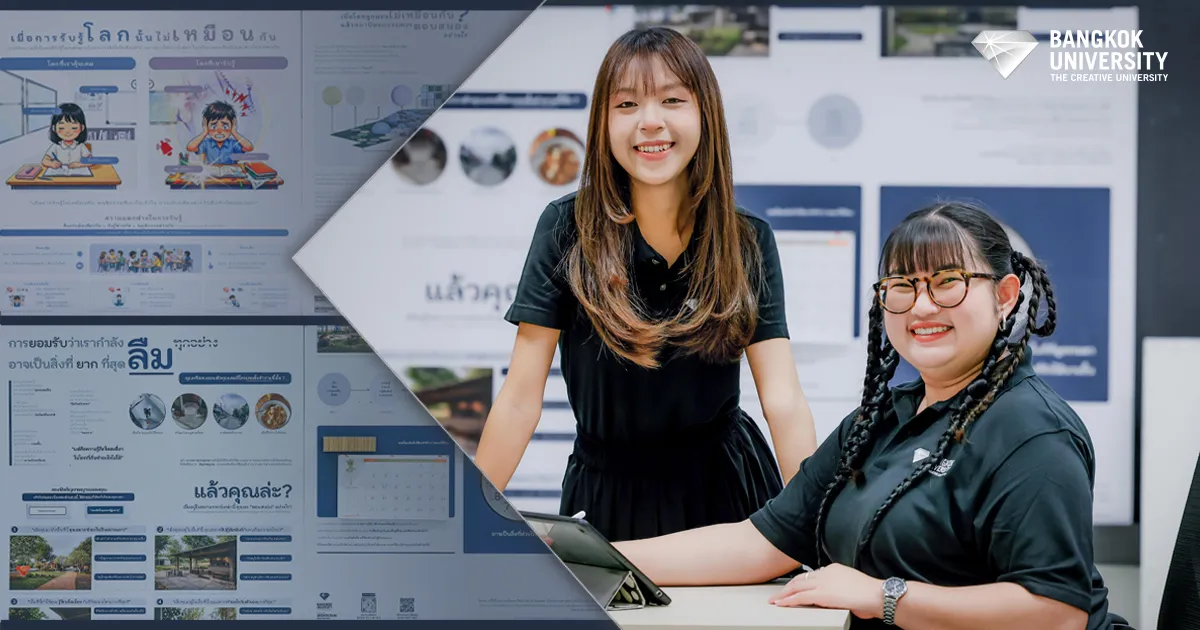
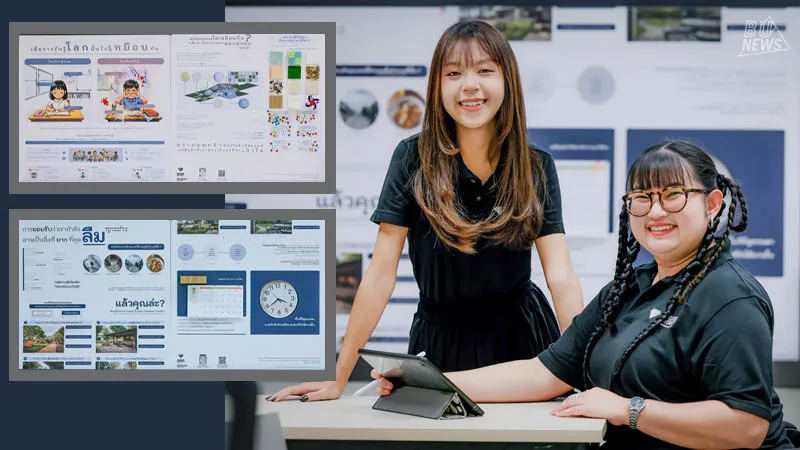
This marks another platform that gave students the opportunity to express Inclusive Design concepts through work that connects people, society, and lived experience. Two architecture students — Miss Natcha Panti (Fang), creator of the Cognitive Health Promotion Center for Alzheimer's Prevention and Integrated Elderly Care, Tha Khlong Municipality, and Miss Suthatip Chuakaew (Mameaw), creator of the School for Children with Autism Spectrum Disorder — presented their thesis projects at รวมมิตรบางกอก: Bangkok Inclusive Art Festival, adapting their presentations to make architectural work more accessible to the general public through storytelling and interactive activities. The festival was organized by the Bangkok Art and Culture Centre, in collaboration with the Foundation for Children with Disabilities, The Rainbow Room Foundation, British Council Thailand, and Thai Public Broadcasting Service (Thai PBS).
From Competition Experience to a Space for Ideas That Reach People
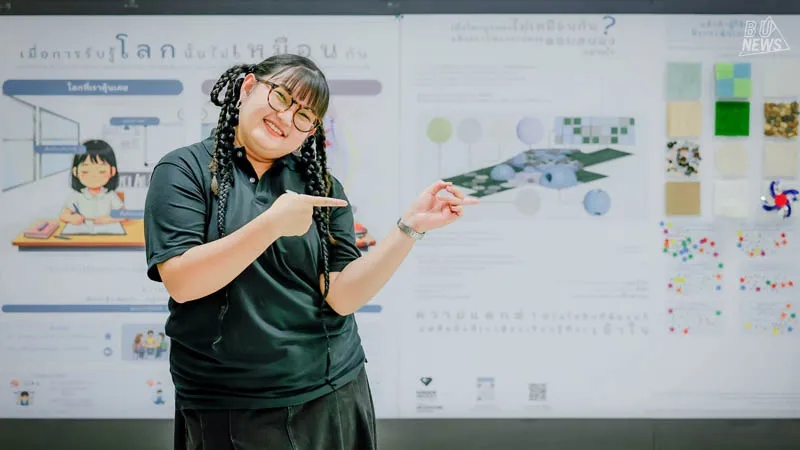
Mameaw shared: "Throughout my studies, I had continuous opportunities to join design projects and competitions, familiarizing me with the process of preparing work and selection criteria. My participation in 'Bangkok Inclusive Art Festival' came through a faculty recommendation, as my work was seen as aligned with Inclusive Design — focusing on design for people with disabilities and the underprivileged."
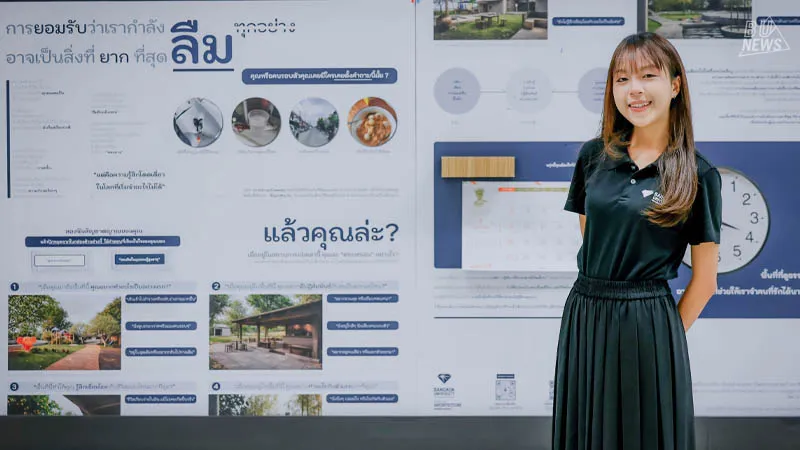
Fang shared: "I also had prior experience presenting work, so I see events like this as an important space for experimenting with how to communicate ideas to a broad audience — not just as a technical architectural presentation, but as building a 'mindset' that invites viewers to interpret and connect with their own experiences. Only 2 works from our faculty were selected for exhibition, and mine was one of them. After submission, there was further review and refinement to align with exhibition constraints and architectural feasibility."
Transforming Architecture Into Storytelling and Participation
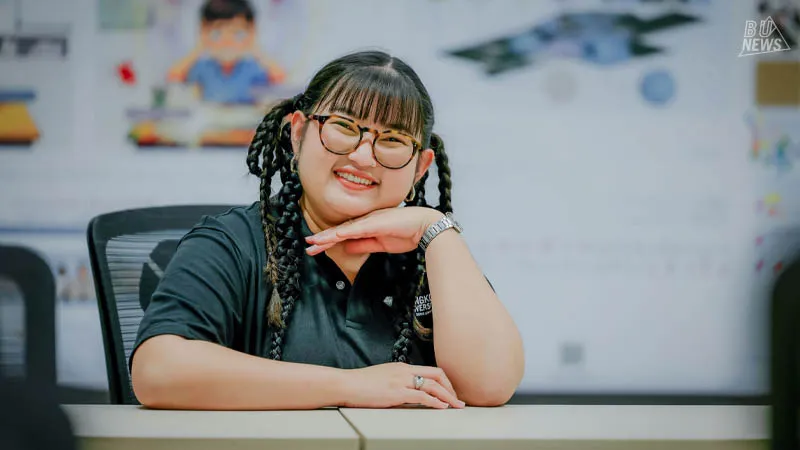
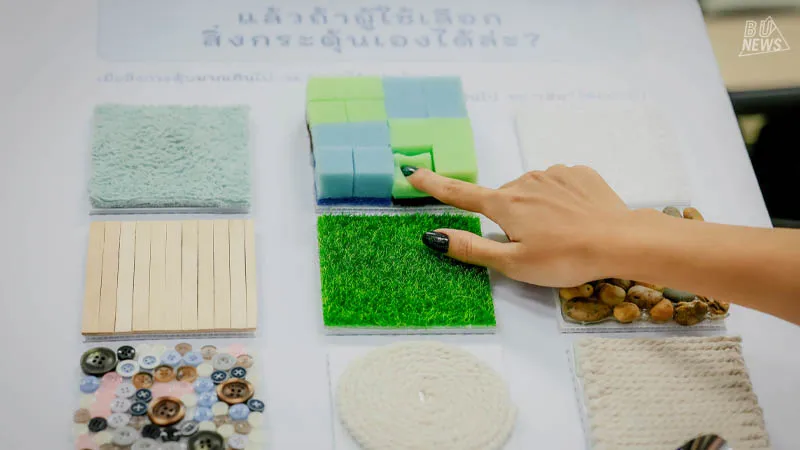
Mameaw explained: "My project is a spatial design for autistic children — researching behavior, sensory sensitivity, and environmental stimuli that affect children with autism, then developing appropriate spatial design guidelines." For the exhibition, she chose Storytelling over a purely technical architectural presentation, and created a "Sensory Board" allowing visitors to touch different materials, colors, and textures — experiencing feelings firsthand — while recording feedback for the work.

Fang shared: "I presented the topic of Alzheimer's through open-ended questions — without naming the disease directly — inviting visitors to connect with people close to them or their own experiences, through spatial elements and interactive board activities."
Feedback from Visitors and Experts — Expanding the Thinking
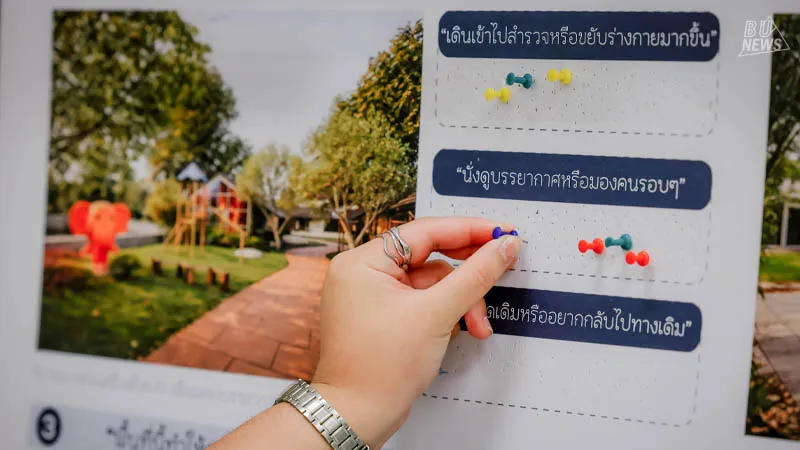
Mameaw shared: "During development, I had the chance to speak with faculty and autism specialists, gaining new perspectives on behavior and specialized design needs. Visitor feedback from the Sensory Board also confirmed that 'feeling' can genuinely be incorporated as part of spatial design."
Fang reflected: "The most important thing I gained was seeing the power of communicating through 'experience' rather than academic explanation. Even visitors with no architectural background could understand the message through questions and thought-provoking elements — turning the design into a shared conversation between creator and audience."
Future Paths and Professional Vision
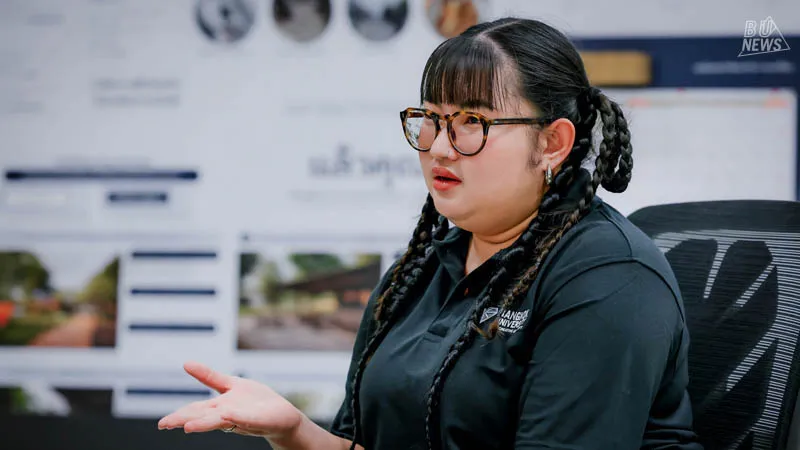
Mameaw: "I have had a clear goal since the beginning — to become an architect. This experience confirmed even more that good design can genuinely improve people's quality of life."

Fang: "I see architectural skills as extendable into many more directions beyond the architectural profession alone — creative work, performance, experience design. I remain open to future career paths and am interested in cross-disciplinary work that applies architectural thinking in new dimensions."

The "Bangkok Inclusive Art Festival" was not merely a student exhibition space — it was a platform reflecting the power of design for equality, communication through lived experience, and connecting people to architecture in ways that are closer to everyday life.